By Dr. Matthew Loux and Bryce Loux | 01/02/2026
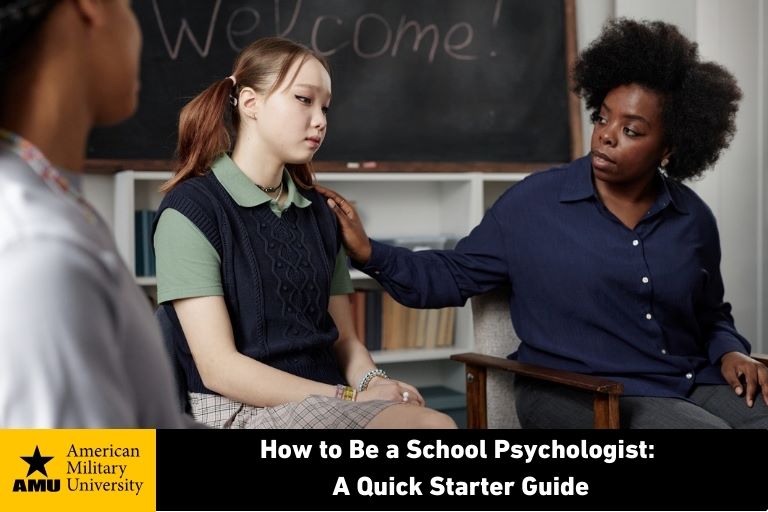
The influence that school psychologists have on the academic, emotional, and social growth of students can be profound. Because of the rising need for comprehensive mental health care and the increasing number of learners with complex psychosocial or mental health issues, there is a significant need for school psychologists.
If you are interested in mental health, education, and working with children, this profession could be an appropriate fit for you. Understanding how to be a school psychologist involves following specific steps to complete the required education, obtain the necessary certifications, and develop the skills needed to thrive in this profession.
What Does a School Psychologist Do?
School psychologists assess and intervene in educational environments to meet students’ learning and behavioral challenges. Their responsibilities include a broad spectrum of activities such as:
- Conducting psychological evaluations
- Collaborating with educators and families
- Designing and executing intervention strategies
- Providing direct psychological counseling and/or intervention
School psychologists work in public and private schools, helping to ensure consistent support regardless of the educational setting. School psychologists support students who have educational disabilities. They help to create positive school environments and provide leadership for district and school mental health programs.
School psychologists uniquely combine the fields of psychology and education. They make sure children get the necessary support for successful academic and social integration by working with:
- Teachers
- School administrators
- Families
- Community stakeholders
School psychologists take part in school initiatives, such as anti-bullying policies, crisis interventions, and a positive behavior support framework. As a result, they are integral to the school’s support systems.
What Steps Are Needed to Be a School Psychologist?
To become a school psychologist, several steps are needed. These steps include:
- Assessing your interest and aptitude
- Obtaining a bachelor’s degree
- Acquiring a graduate degree
- Training through a supervised internship
- Getting certified or licensed at the state level
- Obtaining national certification (optional)
Assessing Your Interest and Aptitude
Students wishing to become school psychologists should first engage in some self-reflection to determine their interests and motivational drivers. Effective school psychologists are strong communicators.
In this case, empathy, patience, and a love of working with children and adolescents are essential. In addition, school psychologists should be willing to work with individuals from varied backgrounds and be alert to sensitive issues or difficult circumstances.
Obtaining a Bachelor’s Degree in Psychology or a Similar Field
The first formal step to becoming a school psychologist is to obtain a bachelor’s degree from an accredited institution. While there is no specific major that you should pursue, it is advisable to consider a degree in psychology, education, child development, or other related fields.
These types of programs can give you foundational knowledge in:
- Human behavior
- Learning theories
- Developmental psychology
- Educational systems
Understanding foundational concepts will help you identify the type of educational psychology specialty that fits your goals.
Earning a Graduate Degree
In the United States, individuals must first obtain a graduate degree to become school psychologists. This training is typically completed at the specialist level, most commonly through an Educational Specialist (Ed.S.) degree or a master’s program focused on school psychology.
Other pathways are available for students interested in school psychology research or teaching at a college level. These educational pathways include doctoral programs in school psychology or a Psy.D. in school psychology.
These graduate programs typically take about three years to complete, including coursework, practicums, and an internship. Graduate students commonly take foundational courses in:
- Psychological assessment
- Development during childhood and adolescence
- Counseling
- Behavior interventions
- Consultations
- Special education law
- Research methods
Training through a Supervised Internship
After graduation, you'll need to complete a supervised internship, which provides you with firsthand experience in a real-world school environment. The National Association of School Psychologists (NASP) suggests a 1,200-hour internship with a minimum of 600 hours in a school setting.
During these hours, interns are assigned to a school psychologist who provides supervision while students complete work in:
- Assessment
- Intervention
- Consultation
- Prevention
Most interns are exposed to a wide range of student needs and school environments, which allow them to observe and understand the numerous ways in which multidisciplinary teams can work together.
Internships must be completed before applicants can graduate and be eligible for state certification or licensure. Most interns choose this time to work on refining the area of psychology in which they wish to specialize.
Most interns choose a specific age group or a specific behavioral intervention. They may also choose other initiatives pertaining to crisis response and prevention.
Getting Certified or Licensed at the State Level
After earning a graduate degree and finishing an internship, students then need to obtain their first school psychologist license or certification to pursue work as a school psychologist. The licensure procedure varies by state, but the common criteria are:
- Completion of a school psychology graduate degree
- Completion of internship training
- A passing score on the Praxis School Psychologist exam or a state equivalent
- Provision of required official documents and transcripts
- A background check and fingerprinting
In some states, the Department of Education provides the “school psychologist” credential. For those states, you may need a psychology practice license from the state psychology licensure board to render school-based psychological services.
Ideally, you should research your state’s requirements. You should also monitor and fulfill continuing education and license/credential re-registration requirements every one to two years.
For psychology graduates who want to work across state lines, they should look for license and degree reciprocity or national certification to streamline their work transition.
Some states may also have specific requirements for school psychologists who work in rural, underserved, or developing communities. Staying connected to policy changes will help you advocate for your school psychology practice and for your community.
Obtaining National Certification
Along with a state-issued certification as a school psychologist, you may choose to apply for the Nationally Certified School Psychologist (NCSP) credential from NASP. Although it is optional, this nationally certified school psychologist certification is held in high esteem nationwide.
The NCSP validates that you comply with national standards for training and practice in school psychology. To achieve this certification, you will have to:
- Attend a NASP-accredited institution
- Finish a required supervised internship
- Pass the Praxis School Psychologist exam
- Engage in professional development
Getting Hired as a School Psychologist
After completing your graduate degree, internship, and initial licensure or certification, you can now pursue school psychologist employment opportunities.
School psychologists can be employed in various settings, including:
- Public and private K-12 schools
- Offices in school districts
- Special education cooperatives
- Alternative education programs
- Early childhood programs
- Higher education institutions
- Private practice
- Other educationally structured organizations
The process of seeking employment typically involves submitting job applications to educational institutions, state school systems, and listings through NASP. Applicants should also prepare a resume and secure reliable references.
During interviews to determine if you're eligible for a position, highlight your experience working with diverse, multicultural, and multidisciplinary teams. Be sure to include your collaboration with educators and school families, as well as your efforts to support and strengthen school and community relationships.
Building strong connections with educators, students, their families, and members of the school community are central to achieving positive and lasting outcomes. These relationships contribute significantly to job satisfaction, ongoing development, and supportive networks.
Continuing Education and Professional Development
School psychology practices are grounded in research-based methods and guided by educational legislation, ensuring that professional standards, vision, and system-wide support are upheld.
School psychology is a dynamic field. The expectations of this profession are reinforced through coursework, assigned workshops, and advanced professional development, where practices are evaluated and aligned with school-related educational standards. These efforts, together with relevant legislation, uphold the goals of this field.
Participating in associations, such as NASP and other national or state-level associations, provides career support and advocacy. Access to advocacy resources, career support, and networking relationships helps to deepen your understanding and alignment with current psychology practices.
Essential Skills for Success
This field requires certain soft skills, including:
- Communication skills – School psychologists must be able to communicate with many people in both verbal and written forms.
- Accurate assessment abilities – Effective psychological and educational assessment requires identifying students’ strengths and needs to guide appropriate testing. It is also useful in ensuring accurate interpretation and scoring and supporting well-founded conclusions.
- Empathy and cultural competence – Trust can be earned. Meaningful support is provided when individual differences and diverse backgrounds are respected in the context of each person’s experience.
- Creative problem-solving – School psychologists are required to solve unique and multifaceted academic and behavioral problems. Thinking creatively is essential.
- Collaboration – In order for students to be healthy and successful, multidisciplinary teams must work in unison.
- Strong ethics – Psychologists should adhere to a strong code of ethics and confidentiality.
A Purpose-Driven Profession
Though becoming a school psychologist is deeply satisfying, it requires a significant amount of training and more than a passing interest in working with children. Considering the current school climate, which places greater emphasis on students’ mental health, school psychologists will continue to play a pivotal role in the education system and positively influence countless students.
The Bachelor of Arts in Psychology at AMU
For students aspiring to become a school psychologist, American Military University (AMU) has an online Bachelor of Arts in Psychology. This bachelor’s degree features courses such as human life space development, personality theories, and psychopathology. Other courses include an introduction to child development, child and adolescent development, and an introduction to social psychology.
For additional information about this B.A. program, visit AMU’s arts and humanities degree program page.
Note: This psychology degree does not provide licensure; preparation for licensure; or professional certification as a mental health counselor, psychologist, or practitioner.
Dr. Matthew Loux is a criminal justice faculty member for the School of Security and Global Studies at American Military University. He holds a bachelor’s degree in criminal justice and a master’s degree in criminal justice administration from the University of Central Missouri State, a doctoral degree in management from Colorado Technical University, and a Ph.D. in educational leadership and administration from Aspen University.
Dr. Loux has been in law enforcement for more than 30 years. He has a background in fraud and criminal investigation, as well as hospital, school, and network security. Dr. Loux has researched and studied law enforcement and security best practices for the past 10 years.
Bryce Loux is an alumnus of American Public University. He holds a bachelor’s degree in fire science with a minor in criminal justice. Bryce is currently a student success coach.