01/29/2026
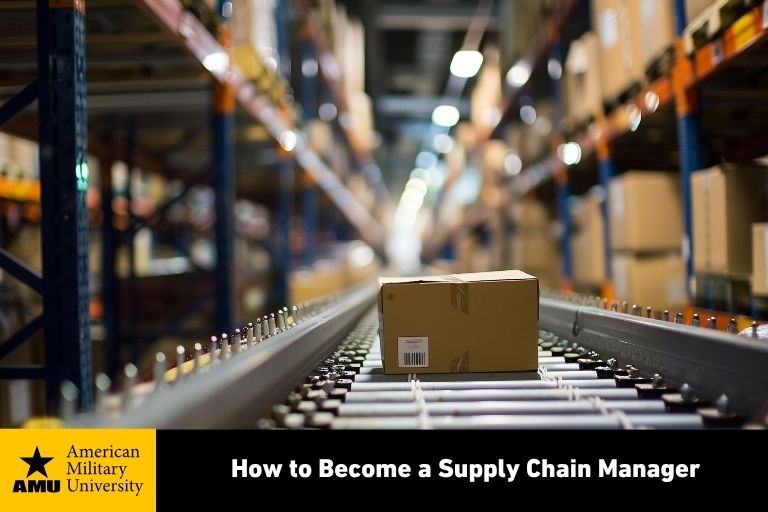
Every product that reaches a customer—from medical supplies to electronics—depends on an effective supply chain. Coordinating this process are supply chain managers, professionals who plan, organize, and oversee the movement of goods, services, and data from suppliers to consumers.
If you’re interested in logistics, project management, or operations planning, learning how to become a supply chain manager is an important first step. Educational paths, certifications, and skill development opportunities can help students prepare for leadership roles in supply chain management.
Students looking to earn a bachelor's degree in supply chain management can expect to study complex logistics challenges, explore global supply systems, and learn from experienced professionals through a flexible online format.
What Supply Chain Managers Do
Supply chain managers are responsible for the flow of materials and products from raw materials to delivery. Their work spans procurement, manufacturing, transportation, inventory management, and distribution.
Typical duties may include:
- Coordinating supply chain logistics and warehouse management
- Overseeing supplier relationships and strategic sourcing
- Monitoring inventory levels to reduce costs and meet demand
- Analyzing data to identify efficiencies and manage risk
- Collaborating across departments, such as finance, marketing, and procurement
Supply chain managers connect every part of the supply chain process, ensuring that products reach the right place at the right time while maintaining efficiency and quality.
Step 1: Earn a Bachelor’s Degree in Supply Chain Management
The first step toward becoming a supply chain manager is completing a bachelor’s degree in supply chain management or a related field like operations management or business administration.
A typical online bachelor’s degree in supply chain management emphasizes both theory and practical application. The curriculum may include:
- Capacity planning and demand management
- Warehouse management and reverse logistics
- Transportation and acquisitions management
- Order fulfillment and customer service from a supply chain perspective
Students also learn to apply problem-solving, critical thinking, and performance metrics to real-world challenges—skills essential for effective supply chain operations.
Some programs offer concentrations that allow students to tailor their studies in areas such as:
- Government Contracting and Acquisitions
- Reverse Logistics Management
- Transportation and Logistics Management
These concentrations allow students to specialize in key areas of supply chain management and align their studies with specific career goals.
Step 2: Gain Experience in Supply Chain Operations
Many professionals begin their careers in entry-level roles that provide exposure to supply chain activities, such as:
- Supply chain analyst
- Procurement specialist
- Logistics coordinator
- Demand planner
- Inventory control associate
These roles offer opportunities to apply classroom learning in real-world settings, understand how supply chain systems work, and develop problem-solving skills used daily in the field.
Students may also benefit from internships, guest lectures, and networking opportunities with professionals who work in manufacturing, transportation, or distribution.
Step 3: Earn Certification and Pursue Professional Development
Professional certification can demonstrate commitment and specialized expertise in the field. One widely recognized credential is the Certified Supply Chain Professional (CSCP) designation, offered by the Association for Supply Chain Management (ASCM).
The CSCP certification demonstrates expertise in areas such as:
- Supply chain optimization and analytics
- Logistics management and global sourcing
- Operations planning and forecasting
- Procurement and inventory management
Staying current through professional development, such as attending industry conferences or completing continuing education, can help supply chain professionals stay informed about emerging industry trends and digital transformation in global logistics.
Step 4: Build Key Skills for Supply Chain Management
Becoming an effective supply chain manager requires more than technical knowledge. The role depends on a blend of analytical, leadership, and communication skills that allow professionals to make informed decisions across departments.
Core skills include:
- Leadership and teamwork – enabling effective coordination and team direction.
- Data analysis and critical thinking – for understanding performance metrics and forecasting demand.
- Communication skills – to explain logistics strategies clearly across departments.
- Strategic thinking – to align operations with business goals.
- Adaptability – to manage risks and respond to changing supply conditions.
Students gain a strong foundation in these areas through coursework in logistics management, supply management, and operations planning, often guided by faculty with industry experience.
Step 5: Explore Advanced Education
While a bachelor’s degree may provide the foundation for many supply chain management careers, some professionals pursue a master’s degree to expand their knowledge of supply chain strategy and operations.
An advanced degree often delves deeper into data analytics, strategic sourcing, procurement management, and sustainability—topics that are increasingly important as organizations focus on chain optimization and resilience.
Students considering graduate study can look for programs that offer flexibility, research opportunities, and direct applications to supply chain operations and project management.
For insights into how a graduate degree can support your long-term goals, explore "Is a Master’s in Supply Chain Management Worth It?".
Step 6: Stay Ahead of Digital Transformation
The future of supply chain management is being shaped by digital transformation. Emerging technologies such as artificial intelligence, blockchain, and the Internet of Things (IoT) are reshaping how supply chains operate.
Modern supply chain managers are expected to use data analytics and automation tools to:
- Improve visibility across global supply chains
- Reduce costs through predictive modeling
- Enhance collaboration with suppliers and customers
- Respond quickly to disruptions and industry trends
Many academic programs now incorporate these evolving areas, teaching students how technology supports smarter, more efficient supply chain processes.
Step 7: Understand the Job Outlook
Employment opportunities in supply chain management have expanded in recent years, driven by the growing complexity of global logistics and the need for operational efficiency.
Supply chain managers work in diverse industries, including manufacturing, transportation, retail management, and government organizations. The field also attracts military logisticians and veterans who may be interested in applying their operational expertise to civilian supply chain environments.
How Long Does It Take to Become a Supply Chain Manager?
The timeline to become a supply chain manager varies depending on education and experience. Most professionals spend about four years completing a bachelor’s degree, followed by several years in entry-level or mid-level roles before advancing to management positions.
Earning certifications, pursuing networking opportunities, and staying up to date on emerging technologies which may support continued professional development in the field.
Your Path Forward in Supply Chain Management
Learning how to become a supply chain manager is about more than understanding logistics—it’s about learning how global systems connect and how leadership, analysis, and innovation shape success.
A bachelor’s degree in supply chain management can help students build essential knowledge, explore specialized areas, and develop the analytical and leadership skills needed to manage supply operations across industries.
Online programs often provide asynchronous learning, offering flexibility for students to study on their own schedules. Faculty with real-world expertise in logistics and procurement can help prepare students to address industry challenges with confidence and critical thinking.
For those looking to start or advance a career in supply chain management, earning a degree from an accredited program can be a valuable step toward developing the knowledge and skills needed to lead and adapt in today’s global economy.