01/29/2026
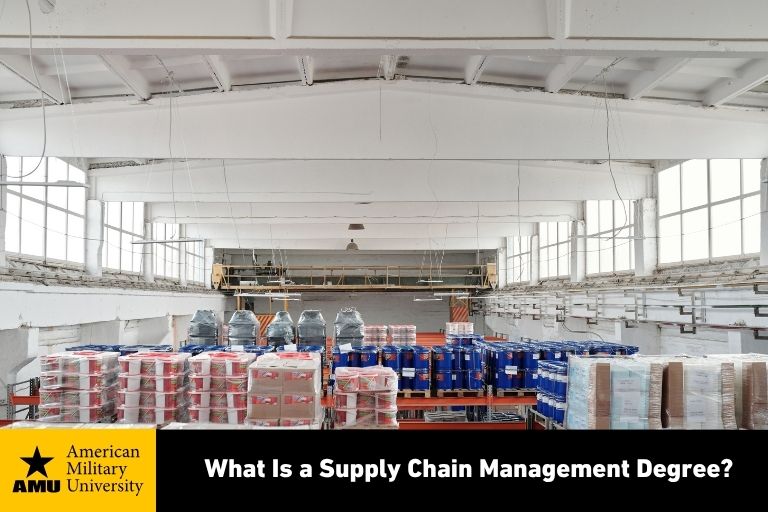
Whether you’re ordering shoes online or restocking shelves at a hospital, a well-designed supply chain makes the difference between success and delay. Behind every product lies a network of suppliers, data systems, transportation providers, and inventory managers. A supply chain management degree focuses on how to manage these complex systems and ensure the steady movement of goods and services from raw materials to finished products.
The importance of effective supply chain management became clear during recent global disruptions, when shortages revealed how interconnected and fragile global networks can be. Students interested in systems thinking, operations, and real-world problem solving often find this degree a strong fit.
Explore what supply chain management students can expect to learn, the types of career paths they may pursue, and the specialized skills that help shape professionals in this dynamic field.
The Value of Studying Supply Chain Management
A supply chain management degree equips students with the tools to manage operations that touch nearly every part of modern business. Whether in manufacturing, healthcare, retail, or service industries, the ability to plan, source, deliver, and return products efficiently is essential.
Most companies depends on a responsive supply chain to meet customer demand. Delays, bottlenecks, and inefficiencies can have ripple effects across entire industries. That’s why organizations across the world increasingly seek supply chain professionals who can spot problems and improve operations.
Graduates may pursue roles in areas such as logistics, sourcing, inventory planning, or retail management, depending on individual experience and job market conditions.
Building Problem-Solving Skills in a Supply Chain Management Program
One of the most valuable aspects of a supply chain management degree is its emphasis on problem-solving. Students learn how to respond to industry-relevant challenges, such as material shortages or delivery disruptions, by analyzing data, evaluating options, and making informed decisions.
This work often involves coordination across multiple stakeholders, including suppliers, manufacturers, and retailers. To do this effectively, supply chain professionals require a combination of technical knowledge and effective communication skills. They also need to understand how global supply chains operate and be able to adapt quickly to disruptions.
From demand forecasting to vendor negotiation, problem-solving is central to the degree program.
Key Benefits of a Supply Chain Management Major
The supply chain management major brings together core business education and targeted supply chain knowledge. Students begin with foundational courses in economics, accounting, and management. They then progress into specialized courses that cover sourcing, procurement, logistics, and operations.
The curriculum is designed to help students manage everything from raw materials to finished products. Courses may include:
- Strategic sourcing and supplier management
- Transportation and logistics systems
- Operations and production planning
- Supply chain risk and resilience
- Data-driven decision making in supply chain management
Through these topics, students explore how to manage supply and demand across increasingly complex systems.
Specializations in a Supply Chain Management Degree Program
One of the strengths of a supply chain management degree is its flexibility. Many programs allow students to select a concentration or specialization based on their career goals.
Logistics and transportation tracks focus on the physical movement of goods. Students learn how to design efficient distribution networks, manage delivery schedules, and optimize warehouse layouts.
Retail management specializations examine consumer behavior, product flow, and inventory optimization. These studies prepare students to manage fast-moving environments with a focus on customer satisfaction.
Some programs integrate project management coursework, which is especially useful for those looking to lead large-scale supply chain initiatives. Students may also explore information systems and data analysis to support supply chain forecasting and planning.
Essential Skills Gained from a Supply Chain Management Degree
A supply chain management program builds a versatile skill set that combines analytics with leadership. Students often develop strengths in:
- Procurement and sourcing strategies
- Logistics planning and delivery systems
- Forecasting and demand planning
- Supplier negotiation and relationship building
- Data analysis and decision-making tools
- Inventory management and cost control
In addition to technical knowledge, students strengthen their abilities in project management, collaboration, and strategic thinking. These skills may help graduates prepare to lead teams, manage vendors, and support business decisions across departments.
Some programs offer the option of combining a bachelor's degree with an accelerated master’s degree in supply chain management—ideal for those who want to deepen their expertise and gain advanced knowledge quickly.
Gaining Real-World Experience in a Supply Chain Management Program
Experiential learning plays a major role in supply chain education. Many students complete internships or cooperative education programs (co-ops) with companies across sectors like manufacturing, healthcare, or logistics.
Students apply their classroom knowledge in practical settings during these placements, build professional networks, and better understand what roles they enjoy. Companies also benefit from evaluating future talent, which may result in full-time offers after graduation, depending on employer needs and individual performance.
Career centers and program advisors often help students identify and prepare for these experiences, which may be required for graduation depending on the program.
How Technology Powers Modern Supply Chain Management
Today’s supply chains rely heavily on technology. From tracking shipments in real time to using artificial intelligence for demand forecasting, digital tools are central to managing modern operations.
Students in a supply chain management program learn to work with:
- Enterprise Resource Planning (ERP) systems
- Supply chain analytics platforms
- Inventory management software
- Data visualization and reporting tools
This technical exposure prepares graduates to step into roles where they can support digital transformation efforts, streamline operations, and improve customer experiences through data-driven insights.
Typical Career Paths in Supply Chain Management
What Can You Do With A Supply Chain Management Degree? A supply chain management degree may open the door to a variety of roles in business and industry. Common entry-level roles include:
- Logistics coordinator: Manages shipments, schedules, and carrier relationships.
- Procurement specialist: Sources materials, negotiates with suppliers, and manages contracts.
- Demand planner: Analyzes trends and sales data to forecast future product needs.
- Supply chain analyst: Reviews processes to identify inefficiencies and suggest improvements.
With experience and additional qualifications, professionals may pursue senior roles such as supply chain managers, sourcing directors, or operations executives. These positions require a combination of strategic oversight, leadership skills, and the ability to manage relationships across global supply chains.
Preparing for the Future with a Supply Chain Management Degree
A supply chain management major connects core business education with applied case studies. It equips students to understand how goods and services reach consumers and how systems can be improved for greater efficiency and resilience.
For students drawn to project management, logistics, or problem-solving, this degree offers a structured path to explore those interests. With growing demand across industries, a supply chain management degree may offer opportunities to develop relevant skills for contributing to modern business operations.