By Dr. Matthew Loux and Bryce Loux | 10/20/2026
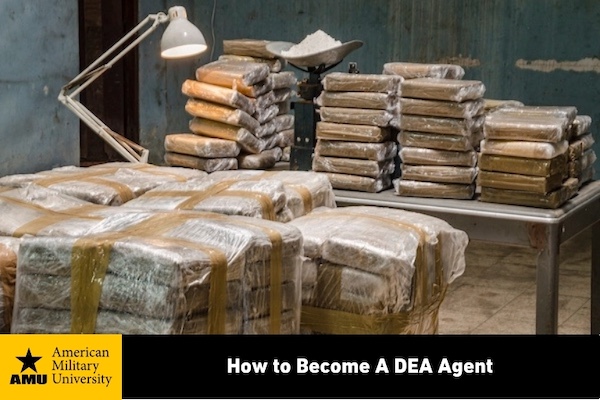
Do criminal investigations, drug enforcement, and public service interest you? A career path as a Drug Enforcement Administration® (DEA®) Special Agent may be worth considering.
DEA Special Agents investigate illegal drug activity by collecting and analyzing evidence, conducting surveillance and undercover operations, and making arrests. They also assist prosecutors, partner with other law enforcement agencies, and testify in court. The work requires strong investigative skills, physical fitness, sound judgment, and integrity.
Before you become a DEA Special Agent, however, you must meet federal eligibility and education requirements and complete the DEA hiring process. Depending on the position and current DEA requirements, that process may include a physical task assessment, medical examination, and drug test, as well as a polygraph examination, background investigation, and other screenings.
Candidates must also be able to obtain and maintain the required security clearance and complete DEA training. Because requirements can change, applicants should always consult the DEA and USAJOBS®, the employment portal for federal agencies, for current information.
The Mission of The Drug Enforcement Administration
The Drug Enforcement Administration is a federal law enforcement agency within the U.S. Department of Justice. Its mission includes enforcing federal controlled substance laws and investigating organizations and individuals involved in the illegal production and trafficking of controlled substances.
DEA Agents work complex investigations, conduct surveillance, and develop information from confidential sources. Agents may also travel to other jurisdictions to assist in executing search or arrest warrants.
Investigations involving international criminal organizations, the illegal drug trade, money laundering, and dark web markets are among the complex cases DEA Special Agents may encounter. These investigations can require agents to collaborate with intelligence analysts, technicians, prosecutors, state and local law enforcement partners, and foreign officials.
Basic Qualifications and Eligibility for DEA Agents
To begin the application process for a DEA Special Agent position, applicants must be U.S. citizens, possess a valid U.S. driver’s license, and be at least 21 years old. Applicants generally must apply by age 36, although exceptions to the maximum entry age limit may apply to a preference-eligible veteran, certain current or former federal law enforcement personnel, or other qualifying applicants. Candidates must also be in excellent physical condition and able to obtain and maintain a top secret security clearance.
Other qualifications include:
- Signing a mobility agreement
- Completing a pre-employment medical examination
- Completing a polygraph examination
- Passing an E-Verify employment verification check
- Completing required drug testing
Candidates must also satisfy strict hearing, vision, and overall health standards and demonstrate their physical readiness through the physical task assessment. From application to appointment, the process can take up to 12 months, reflecting the extent of the screening and preparation involved.
Candidates who successfully move through that process may then receive an offer for DEA Academy training, with program length depending in part on whether they have completed qualifying prior training.
DEA Education Requirements and Experience
While a college degree is not the only pathway to a career with the DEA, education can help applicants meet certain qualification requirements. The DEA provides several career pathways based on education, professional experience, or a combination of both education and experience.
For example, candidates may be eligible for the DEA with:
- A bachelor’s degree that meets the DEA’s academic requirements
- A graduate degree
- Qualifying investigative experience
- Professional experience combined with designated special skills
Candidates interested in a DEA career path may consider academic programs that provide relevant preparation for federal criminal investigations. Degrees in criminal justice, accounting, finance, and intelligence studies are among the academic disciplines that may provide relevant knowledge. However, applicants should not assume that a degree in one specific field is required to pursue a position with the DEA.
Investigative and professional experience can also strengthen an applicant’s qualifications. Relevant experience may include reporting incidents, collecting evidence, conducting interviews and research, as well as analyzing data, preparing case files, giving presentations, and collaborating across organizations.
Experience in military service, law enforcement, accounting, aviation, engineering, information systems, telecommunications, or a foreign language may also provide special skills recognized by the DEA. Internships with law enforcement agencies, courts, prosecutors’ offices, or other relevant organizations can also prove helpful.
Developing The Right Skills to Become A DEA Agent
Academic preparation alone is not enough for aspiring Special Agents. Applicants also need additional skills such as:
- Strong oral and written communication
- Attention to detail
- Decision-making abilities
- Flexibility
- Ethics
- Problem-solving abilities
- Self-management
- Interpersonal skills
- Teamwork
Many of these skills can be developed through academic, professional, and practical experience. Aspiring agents can strengthen their communication skills through professional writing, public speaking, and other opportunities to present information clearly. Investigators spend substantial time preparing reports, and agents may brief supervisors, prosecutors, and other members of an investigative team on their findings.
DEA Special Agents also need strong critical thinking skills. Agents must be able to analyze information, identify gaps, and prioritize steps in an investigation. Research and internships can also help aspiring agents strengthen their critical thinking and analytical skills.
DEA Fitness Requirements for Special Agents
DEA Special Agents may encounter dangerous, physically demanding situations while making arrests, serving warrants, and protecting themselves and other people. Candidates must meet the DEA’s physical and medical requirements, and physical readiness remains an important part of Special Agent training.
Candidates should begin preparing for the physical demands of the hiring process well before applying. A fitness program that develops cardiovascular endurance, strength, muscular endurance, and flexibility can help prepare applicants for the DEA’s physical task assessment.
Candidates should always read the DEA’s current testing and preparation materials to understand the physical and mental requirements. Currently, candidates must complete a certain number of sit-ups and push-ups and run for 1.5 miles.
DEA Firearm Proficiency
DEA Special Agents must be willing and able to handle firearms, and firearm safety and proficiency are also part of basic agent training. Applicants must be prepared to handle firearms safely, exercise sound judgment, and follow agency policy.
The DEA Application Process
The hiring process for DEA agents is rigorous and involves four phases that applicants must complete to remain under consideration. The phases include:
- Phase 1: Physical Task Assessment (PTA) – Candidates complete the required physical assessment.
- Phase 2: Proctored testing – Applicants complete a written assessment at an approved testing location. The assessment evaluates the competencies used in Special Agent work.
- Phase 3: Basic qualifications review – Candidates who complete the first two phases undergo a review to verify that they meet minimum qualification and eligibility requirements.
- Phase 4: Structured interview – A panel evaluates candidates on job-related competencies such as interpersonal skills, oral communication, problem-solving abilities, self-management, teamwork, and judgment.
The background investigation examines an applicant’s personal and professional history as part of the DEA’s suitability and security clearance process. Applicants must provide complete and accurate information throughout the application process.
Dishonesty and deliberately misrepresenting information, including prior illegal drug use or drug abuse, can result in disqualification. Questions about eligibility or screening requirements can be directed to a DEA recruitment coordinator.
DEA Academy Training
Selected candidates must complete required basic training at the DEA Academy in Quantico, Virginia. Because the DEA currently publishes differing program lengths across its official materials, prospective Special Agents should consult the current job announcement and DEA training guidance for the requirements that apply when they are hired. Training may include physical fitness, legal instruction, report writing, driving, defensive tactics, operational skills, and firearms training.
Training at the DEA Academy extends well beyond classroom instruction. Candidates must demonstrate that they can perform required tasks, apply legal concepts, make sound decisions, meet physical standards, and complete practical exercises. The program prepares new agents for the operational demands of being a federal law enforcement officer.
What Are The Responsibilities of A DEA Special Agent?
After training, Special Agents may investigate drug trafficking, conduct surveillance, develop leads, and work with confidential sources. They can also execute warrants, interview witnesses and suspects, collect and process evidence, and make arrests. In addition, agents may prepare investigative reports and assist prosecutors with case preparation.
Assignments can vary considerably. Some Special Agents may spend more time in the field, while others spend time working on cases connected to organized criminal groups, financial cases, intelligence, or international drug trafficking. Collaboration is essential because major investigations often span multiple agencies and jurisdictions.
Applicants should be prepared for the demands of a Special Agent career path. For instance, agents may be required to relocate and work irregular schedules. The job may involve extensive travel and work during nights, weekends, and holidays.
The Impact of Being A DEA Special Agent
For qualified applicants, a career path in federal law enforcement can offer an opportunity to contribute to public service and the enforcement of federal drug laws on a case-by-case basis. DEA agents also have the opportunity to protect their communities, reduce drug abuse, and get criminals off the street.
The Bachelor of Arts in Criminal Justice at AMU
For adult learners who want to study criminal justice, American Military University part of American Public University System (“AMU”) provides an online Bachelor of Arts in Criminal Justice. Courses offered through this degree program include U.S. law enforcement, criminal investigation, and criminology. Other courses involve constitutional law, ethics in criminal justice, criminal law, and the criminal legal process.
This B.A. in criminal justice offers four concentrations, enabling students to choose the courses best suited to their professional goals:
- Entrepreneurship
- General
- Maritime law enforcement
- Organizational law enforcement leadership
For more information, visit AMU’s criminal justice degree program page.
The Bachelor of Arts in Criminal Justice at American Military University part of American Public University System is not designed to meet the educational requirements for professional licensure or certification in any country, state, province, or other jurisdiction. This program has not been approved by any state professional licensing body and does not lead to any state-issued professional licensure. For further information on professional licensing requirements, please contact the appropriate board or agency.
Drug Enforcement Administration® and DEA® are registered trademarks of Drug Enforcement Administration.
USAJOBS® is a registered trademark of U.S. Office of Personnel Management.
Dr. Matthew Loux is a criminal justice faculty member for the School of Security and Global Studies at American Military University part of American Public University System. He holds a bachelor’s degree in criminal justice and a master’s degree in criminal justice administration from the University of Central Missouri State, a doctoral degree in management from Colorado Technical University, and a Ph.D. in educational leadership and administration from Aspen University.
Dr. Loux has been in law enforcement for more than 30 years. He has a background in fraud and criminal investigation, as well as hospital, school, and network security. Dr. Loux has researched and studied law enforcement and security best practices for the past 10 years.
Bryce Loux is an alumnus of American Public University. He holds a bachelor’s degree in fire science with a minor in criminal justice. Bryce is currently a student success coach.