10/20/2026
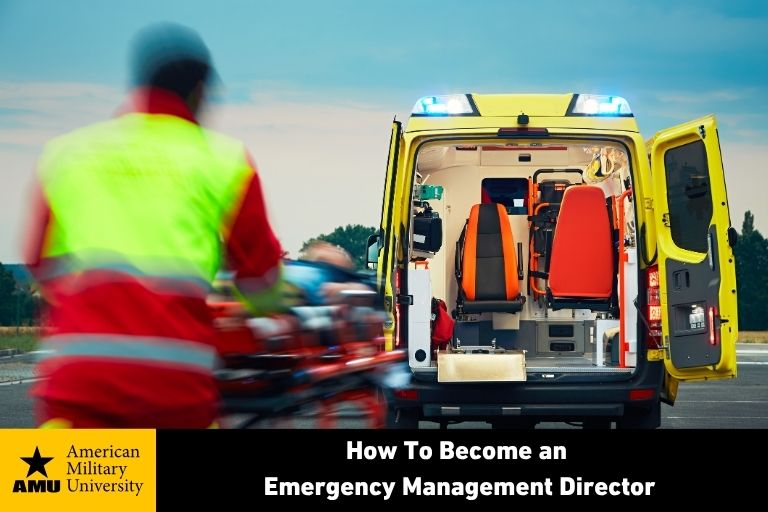
Emergency management directors typically help communities and organizations prepare for emergencies, coordinate response efforts, and recover after disruptive events. Their work can involve everything from natural disasters and public health incidents to infrastructure failures, fire safety concerns, and other emergency situations.
For students asking how to become an emergency management director, there is no single route into the role. Many professionals begin in emergency response, public safety, government, military service, planning, or related fields before moving into positions with broader responsibility. Education, field experience, emergency response training, and leadership experience can all play a part.
Understanding the role requires looking at the education, professional experience, training, and skills commonly associated with emergency management leadership.
Building the Education and Experience Behind Emergency Management Leadership
Preparing to pursue an emergency management director role can take time because director-level positions may involve responsibility for people, plans, resources, and coordination across multiple agencies.
A bachelor's degree in emergency and disaster management is commonly associated with the profession, and relevant experience may also be an important consideration for employers. Some professionals also pursue a master's degree or additional training involving emergency management planning, disaster response, and organizational leadership.
The path can look different depending on whether someone works for local or state governments, medical facilities, federal agencies, private companies, or other emergency management organizations.
What Emergency Management Directors Do
Emergency management directors typically help prepare communities or organizations for emergencies and coordinate activities when incidents occur.
Their responsibilities may include developing emergency preparedness plans, assessing hazards, organizing disaster preparedness training, managing emergency operations, and maintaining relationships with local agencies and other government organizations.
During an emergency response, directors might coordinate with public safety officials, first responders, government agencies, medical facilities, and community organizations. They may also help request state or federal assistance when local resources are not sufficient.
After an incident, emergency management directors may work with teams to review what happened, identify lessons learned, and revise plans where needed.
Education for Emergency Management Directors
Education requirements for emergency management positions vary by employer, and some positions may require or prefer a bachelor's degree.
Relevant degree subjects may include emergency management, homeland security, public administration, public safety, fire science, or another related field.
Depending on the institution and curriculum, an emergency management bachelor's degree program may address areas such as:
- Disaster preparedness
- Emergency response
- Hazard assessment
- Emergency planning
- Public safety
- Crisis communication
- Disaster recovery
- Risk mitigation
- Critical thinking
Online degree options may also suit students who are already working in emergency services, government, military roles, or another related profession.
Students considering a program should look at the curriculum, accreditation, faculty experience, and how closely the coursework matches their interests.
Considering a Master's Degree
A master's degree can provide another way to study the field in greater depth.
American Military University's Master of Arts in Emergency and Disaster Management is a 36-credit online program focused on areas such as emergency and disaster theory, interagency disaster management, hazard mitigation, crisis action planning, cybersecurity, and research methods.
Courses include Emergency and Disaster Planning and Management, Interagency Disaster Management, Hazard Mitigation and Resilient Communities, and Crisis Action Planning.
Students can also choose from areas such as mass casualty incident management, disaster health management, climate change adaptation, public management, security risk management, and organizational crisis management.
Graduate education does not guarantee a director position, but it may provide opportunities for more advanced study of the complex planning and coordination involved in emergency management operations.
For a closer look at the possibilities beyond graduate study, explore "What Can You Do With A Masters In Emergency Management?" to learn about different roles and career paths in the field.
The Emergency Management Career Path
An emergency management career path may start with positions such as emergency planner, emergency management specialist, preparedness coordinator, disaster response specialist, or another role connected with public safety or emergency operations.
Experience can also come from law enforcement, fire services, the military, healthcare, local government agencies, or disaster relief work.
As professionals gain experience, they may take on responsibility for developing plans, coordinating exercises, managing projects, supervising staff, or working across multiple organizations.
Employers may consider that type of background when evaluating candidates for emergency management director positions.
Field Experience and Emergency Response Training
Practical experience may help professionals develop familiarity with emergency planning and response in unpredictable conditions.
Students and early-career professionals might gain experience through internships, volunteer opportunities, emergency preparedness exercises, public safety roles, or work with local emergency management agencies.
Emergency response training can also introduce professionals to incident command structures, interagency coordination, communication procedures, and disaster response planning.
Some roles may require specific training depending on the organization and jurisdiction.
Certifications in Emergency Management
Professional certifications are another consideration for some emergency managers.
The Certified Emergency Manager credential is one example commonly associated with the field. Other credentials may focus on emergency management, business continuity management, or related areas.
Certification requirements are separate from university degree requirements and often include professional experience, training, examinations, or continuing education.
Students interested in certification should review the current requirements of the relevant credentialing organization before making plans around a particular qualification.
Skills Used in the Emergency Management Field
Emergency management directors may coordinate people and information in situations where priorities can change quickly.
Some of the skills commonly associated with the role include:
- Leadership
- Communication
- Critical thinking
- Risk assessment
- Emergency planning
- Resource coordination
- Decision-making
- Crisis communication
- Problem-solving
- Information management
Communication skills may be particularly useful because directors may need to work with public safety officials, elected officials, community organizations, emergency responders, and multiple government agencies.
Where Emergency Management Directors Work
Emergency management directors may work in several different settings.
Emergency management directors work for local and state governments, federal agencies, hospitals, utilities, private-sector organizations, and other essential services organizations.
The role can differ significantly between settings. A director working for a county government may focus on community-wide emergency preparedness, while someone working for a medical facility may concentrate on healthcare continuity and emergency procedures.
Private companies may also employ emergency management or business continuity managers to help minimize risk and prepare plans for disruptions.
How to Become an Emergency Management Director Step-by-Step
The route into the profession varies, but a typical progression may look something like this:
- Relevant education: Employers may require or prefer education in emergency management, homeland security, public administration, or a related field.
- Practical experience: Employers may consider experience in emergency management, public safety, emergency response, or related areas.
- Relevant training: Depending on the position, emergency response or incident management training may be relevant.
- Supervisory experience: Some director-level positions may require experience managing people, projects, or operations.
- Professional certification: Some professionals choose to pursue emergency management credentials.
- Graduate education: Depending on individual goals and employer requirements, graduate study may provide additional education in emergency management-related subjects.
- Individual job requirements: Education, experience, training, and certification expectations vary by employer and position.
Preparing for Emergency Management Leadership
Learning how to become an emergency management director is partly about understanding how much the role depends on experience as well as education.
Emergency management directors may be responsible for plans that affect entire communities or organizations. Relevant professional experience may involve emergency planning, disaster preparedness, response operations, communication, and coordination.
Students thinking about the field can review AMU's emergency and disaster management programs, compare course requirements, and study current emergency management job descriptions to see which qualifications appear most often.
Frequently Asked Questions
How Long Does It Take to Become an Emergency Management Director?
There is no set timeline. Emergency management directors typically need a bachelor's degree along with several years of relevant work experience, although requirements vary by employer. Previous experience in emergency response, government, public safety, the military, or related fields may also be relevant.
What Does an Emergency Management Director Do?
Emergency management directors commonly develop emergency response plans, coordinate preparedness activities, assess hazards, organize training, and work with local agencies during emergencies. They may also oversee recovery efforts and review lessons learned after incidents.
Do Emergency Management Directors Need a Bachelor's Degree?
Education requirements vary by employer, and some emergency management director positions may require or prefer a bachelor's degree. Relevant fields can include emergency management, public administration, homeland security, or another related discipline. Individual job requirements should always be checked directly.
Is Emergency Management a Career Worth Considering?
Emergency management may suit students who are interested in public safety, disaster preparedness, leadership, planning, and crisis response. Whether the field is a good fit depends on your interests, existing experience, preferred work environment, and long-term goals.